
Importance and Need of Prototyping Using CNC Machine
For development a new product, most of time will make a prototype to test before launching it in markets.The prototyping stage is important, as it often decides whether the project if go to the next step. CNC machining shops play a key role here, because they produce prototypes parts to help industrial designers validate the designs. And function testing, manufacturabilite before switch to mass production.
CNC milling is the process of producing a physical prototype from a CAD file. It have been widely used for the structure, even functional testing, and assembly checks. Also for small-batch trials in sometimes. The blog is about introduced about the importance of prototyping and why CNC machining is a reliable and good choice. Let’s go.
What Is CNC Prototyping?
Prototyping is when a manufacturer creates a small model or limited quantity of the final product for testing and design verification. The primary aim is to visualize the design, confirm interfaces, identify defects or design flaws, and improve the product before it becomes expensive to change.
There are many ways to prototype a product, but CNC machining is one of the best choice when you need a real material properties. CNC machines can be follow programmed as per your drawings. A typical workflow in our Xinprototype factory, The CAD model is converted into CAM toolpaths for a solid material. And then the CNC machine mills excess materials from the part.
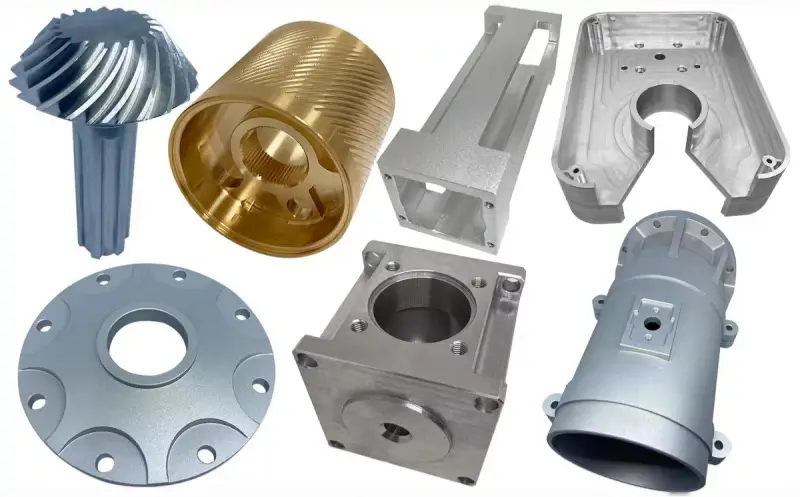
Practical for a case example: One of our customers has designed an aluminum electronics enclosure. Using CNC milling to manufacture a prototype, the part can be produced quickly by CAD and machining, without any tooling costs.
What to Prepare Before Requesting a CNC Prototype Quote?
In order to get an accurate quote and avoid misunderstand. It’s best to share all information when you send out CAD files together. This also helps the shop choose the right machine, and clear understand what kind of prototype you wants.
1) CAD file format :Preferred: STEP (.stp/.step). Also accepted: IGES, DRW, STL or native CAD formats if needed
2) Materials and grade if have: For example, metal of aluminum, not only specific aluminum, but also the grade or number 5052, 6061-T6, 7075-T6, etc. Because different grade of aluminum has different machinability and strength, etc.
3) Quantity: For prototype quantity effective pricing. A single part unit cost huge difference from a 100-500 pieces batch. If you have a deadline, note it to the CNC factory as well.
4) Critical tolerances: Mark which dimensions truly matter in a PDF document and share. If everything is took “tight tolerance,” it will be made the cost will rise and the time go to up.
5) Surface finish:If the part faces customers, specify whether it needs bead blast when anodizing, or the color of painting, etc. Or whether tool marks on the parts can be acceptable.
6) Other requirements: such as assembly and usage notes. A small note will help the shop prevent common prototype failures.
Why Is CNC Prototyping Important?
There are too many reasons to be discussed. But, the following are the most common factors for CNC prototyping being popular.
Highly Precise Option
CNC machining is attractive to people because dimensions can be controlled and made accurate by digital highe precise CNC machines. In fact, prototype tolerances depend on the geometry of the drawing, materials, and process method. But CNC often achieves the goal of keeping consistent, reliable accuracy.
A customer from the USA, who needed a small steel shaft part to evaluate rotation smoothness. The first prototype was received to test, and it had slight binding. Because the mating hole had sharp edges in the internal corners, and a tight fit without a relief. After revising the design of the hole, testing the second CNC prototype assembled is perfectly.
Repeatability
It means that the CNC machines can produce the same part repeatedly, once set up, tooling, and program of the machines in one time. This makes sense when you need multiple prototypes or small batch prototype production.
A product team in Germany was requested to provide 20 pieces identical bracket samples. To do vibration tests and assembly checks in different departments. If the prototypes are different for each, the test results will become unreliable. The repeatability of CNC maching give the team a chance to compare results in fairly conditions
Consistent In Quality
Maintaining quality consistency is important, especially when prototypes are used for a small-batch launch in the market. Most of the time for new products, it usually doesn’t jump from one prototype straight into mass production. They often need 50–200 pieces or more to validate in the early market, or customers’ feedback to updated design.
A startup company is developing a new design for a handheld device. Needed 100 sets of CNC aluminum housings to test the market before open mold mass production. CNC machining enabled the company find trial markets in less investments.

Others Benefits:
Time-Saving: Prototypes manufactured by CNC are often faster a lot than tooling. Because it does not require making molds. Once the CAD is confirmed, parts can be machined within one week, while tooling is about 4–5 weeks. Also, the part is easier for revisions if needed.
Cost-effective Solution: CNC prototyping can be cost-effective because it helps you find errors in the design. The biggest save of the cost is not the part price, but the reduction of the risk.
Material versatility: CNC can process a wide range of materials, including metals and plastics both.Metals such as aluminum, steel, stainless steel, brass, titanium, magnesium, etc. And plastics like ABS, POM, PA (nylon), PP, PE, PEEK, and PC. Testing the prototype of the material, which is the same as the mass production part is key.
Surface finish and appearance: CNC prototypes can be surface finished to see the visual features. You’ll see whether the appearance surfaces as you expected. Or change the color, or use other surface treatments. Picked one that you’d best like.
Wrapping Up
CNC prototyping helps companies validate designs, test functions, and manufacturability with a fast turnaround speed. It can easier to modification or adjustable. And find out the mistakes before turning to mold for mass production. CNC machining has become a popular and cost-efficient way to custom metal and plastic parts for many companies.