

Global delivery in 10 days or less
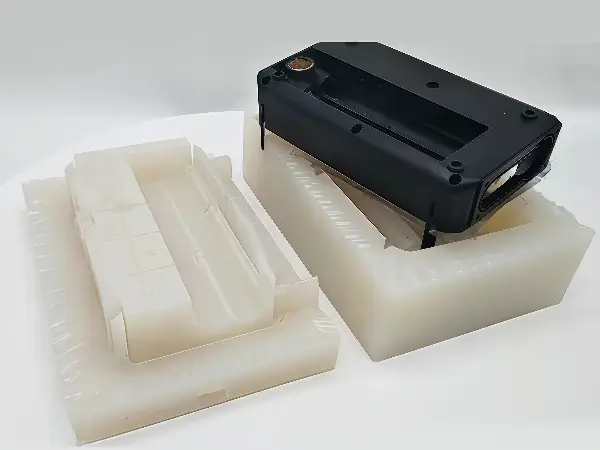
Vacuum casting, also known as silicone molding, polyurethane casting or urethane casting. Is a manufacturing process used to produce high-quality plastic parts using a silicone mold.
This is a great way to make small-batch production of plastic parts, and is ideal for prototypes, engineering tests, concept proofing, display demos, and trade show samples.
Suitable for producing sample prototypes and low-volume batch. With a good appearance and mechanical properties. Less investment than injection molding, but offers higher quality than 3D printing prototypes.
The vacuum machine draws liquid into the mold under vacuum conditions. The material will flow into the cavity and remove bubbles and air pockets.
A master model is manufactured by CNC machining or 3D printing. Then pour liquid silicone into the box. After about 8 – 16 hours, the silicone mold becomes hardened.
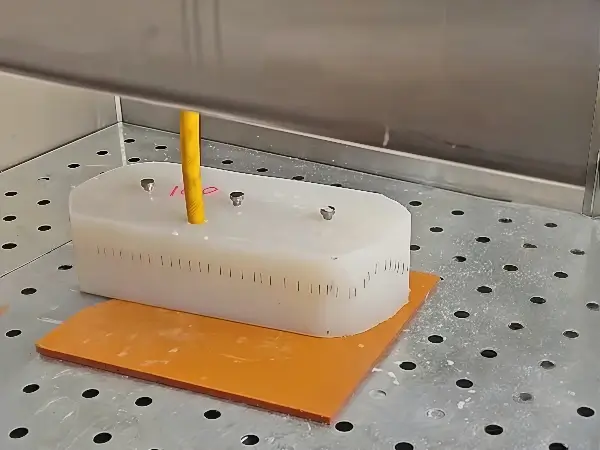
Cure the mold and material at a temperature of 60–80 °C in the oven. After then, take the part from the silicone mold, deburr, etc.
Besides silicone, all of the other materials for the vacuum casting list are from polyurethane (PU) resins. In the formal industrial sector, they are usually named ” ABS-like, PP-like,”… However, in our daily communication, we usually drop the “like” for more convenience. Each resin is compounded to closely match the mechanical properties of the real one. And the parts look like they’re injection-molded parts.
| Material | Simulates | Properties | Recommended Prototype Types |
|---|---|---|---|
| ABS-like | ABS | Rigid, tough, good impact resistance, stable dimensions, easier painting and plating | Industrial housings, consumer electronics enclosures, automobiles, toys |
| PP-like | Polypropylene (PP) | Flexible, chemical-resistant, living hinge capable, low-friction | Electronic insulating components, transportation pipelines, chemical valves, and automotive interiors |
| PC-like | Polycarbonate (PC) | Transparent or translucent, high rigidity, good impact strength, UV stable | Transparent casing, lampshade, display window, optical prototype |
| PMMA-like | Acrylic (PMMA) | High optical clarity (~85–90% transmittance), rigid, polished, slightly less clear than real PMMA | Display boards, consumer electronics, automotive and transportation, decoration |
| PA-like | Nylon (PA) | Wear-resistant, self-lubricating, tough, moderate flexibility, good fatigue resistance | Gears & bearings, hinges & clips, mechanical moving parts, structural test pieces |
| POM-like | Delrin / Acetal (POM) | Very rigid, low friction, excellent dimensional stability, good creep resistance | Precision gears, mechanical parts, electronic and electrical components, automotive industry |
| Rubber-like | TPU / TPE / Rubber | Elastic, excellent rebound, tear resistant, hardness range from very soft to semi-rigid | Seals and gaskets, wearable devices, toys, consumer electronics |
| Silicone | Silicone rubber (LSR/HTV) | Biocompatible, heat-resistant, excellent flexibility, non-toxic | Medical device seals, health devices, consumer electronics, handicrafts |
Whether you need vacuum-cast parts as a functional prototype to test, or appearance prototypes, or low-volume plastic manufacturing. We provide tailored solutions for each stage of product development。
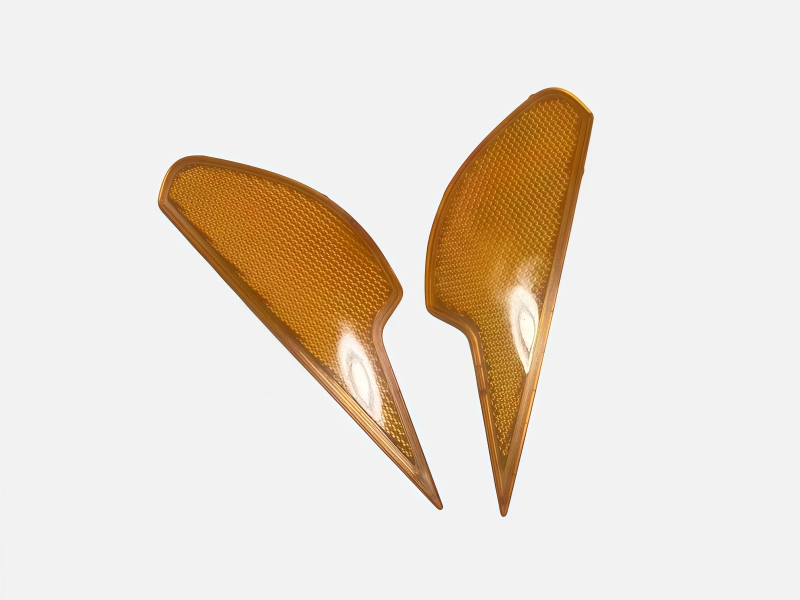
Produce 1 to 20 prototype samples with good quality appearance and mechanical properties. Ideal for design verification, testing, and demo.
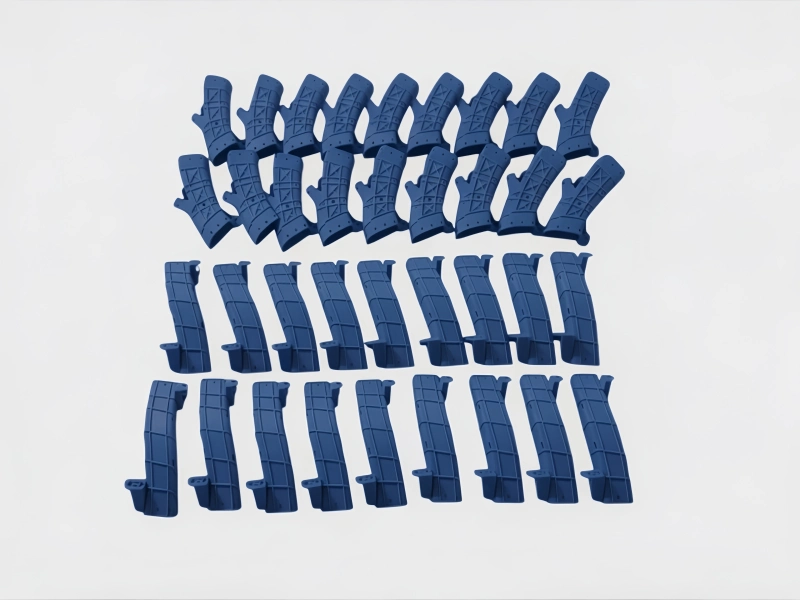
For batches of 20–200 vacuum casting parts, we'll produce multiple of the same silicone molds. Ensure the quality is consistent at scale.
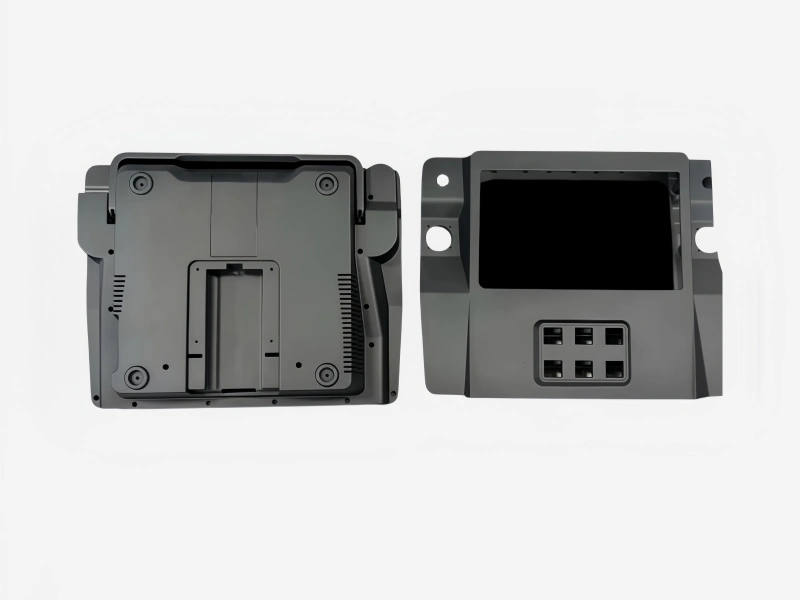
The common and popular material in vacuum casting. Works well with post-processing for painting, texture, or coating
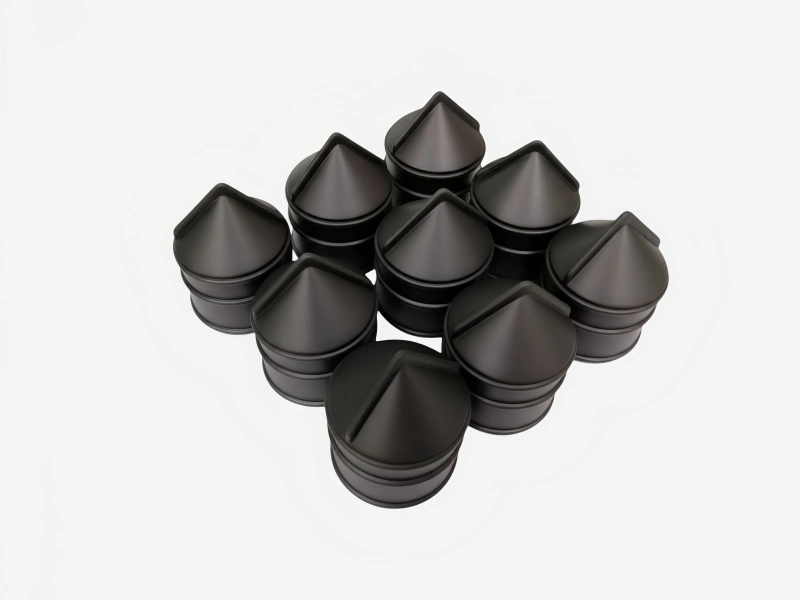
Precision silicone molds copy each detail exactly the same as the master model. Repeat the quality of the parts.
At Xinprototype, we have experience working with our clients from different industries, to help custom and deliver vacuum casting parts Here are 4 common industries, but not limited to those.
Many tuning design companies for automotive choose vacuum casting to produce. From 5 to 20 pieces, ideal for a small batch of car doors, grilles, bumpers, etc. Or R&D in automotive manufacturing, developing a new car to test before opening the mold. Or custom ABS, silicone, and rubber vacuum casting parts used for vehicle interiors, such as the center console assembly and panel, upper and lower instrument panel, air vent bezels, and more.
Learn more →One mold can produce around 10–20 high-quality pieces from a single silicone mold, depending on the part specification and volume
Vacuum casting produces customized plastic parts in complex shapes in a single piece, with no glue lines or visible marks.
Available shore from 40 to 90 degrees to meet requirements. Also provides double-molding of soft and hard plastic in a single piece.
A range of surface finishes after casting is available, such as painting to match the color Ral or Pantone, chrome electroplating, etc.
We are able to handle parts up to 2,000 mm in length. To meet many of the automotive parts' needs, such as bumpers, panels, and grills.
Most orders can be completed the production within 6–10 business days. Compared with injection molding 5–8 weeks, it is faster a lot.
Thousands of vacuum-casting parts delivered to clients in 50+ countries. Here are some of the projects we’ve produced.
ABS, PC, PA, Rubber, Silicone, PMMA, POM, PU, and PP. The shore hardness can be chosen from 40 to 90 degrees. We offer custom colors, and the range of transparency is an option
Standard tolerance is ±0.1–0.3mm, depending on the part size, structure wall thickness, and material type, etc., and other factors. If you have a higher tolerance request for the parts, we recommend our CNC machining service.
One silicone mold can produce about 10–20 pieces of high-quality parts. After that, the part tolerance from the mold will be down, we often produce a new mold to continue the production, and maintain the quality.
The standard lead time is usually 6–10 business days for prototype -20 pieces. Larger orders of 50+ parts may take 2 weeks for delivery. While 200-500+ parts, about 3 – 4 weeks.
We offer a wide range of surface treatments, such as painting based on Pantone code, plating chrome, spray oil, polishing, and more.
Yes, we can embed inserts of metal or hard plastic both. Such as metal parts made from sheet metal fabrication. Or a regular nut column, nuts, or screw, etc.
Different drawing designs have different prices. The pricing depends on part volume, material, and complexity. Contact us today to get a quote.
Share your files with us, get a free and fast quote today